

165. PMEP 4: THE EFFICIENCY MODEL

In this KIW Research Note, we continue our series examining the physiological models proposed to explain fatigue during prolonged exercise. So far, we have covered the Cardiovascular–Anaerobic model, the Energy Stores Depletion model, and the Neuromuscular model. Here, we shift our focus to the fourth framework: the Efficiency model.
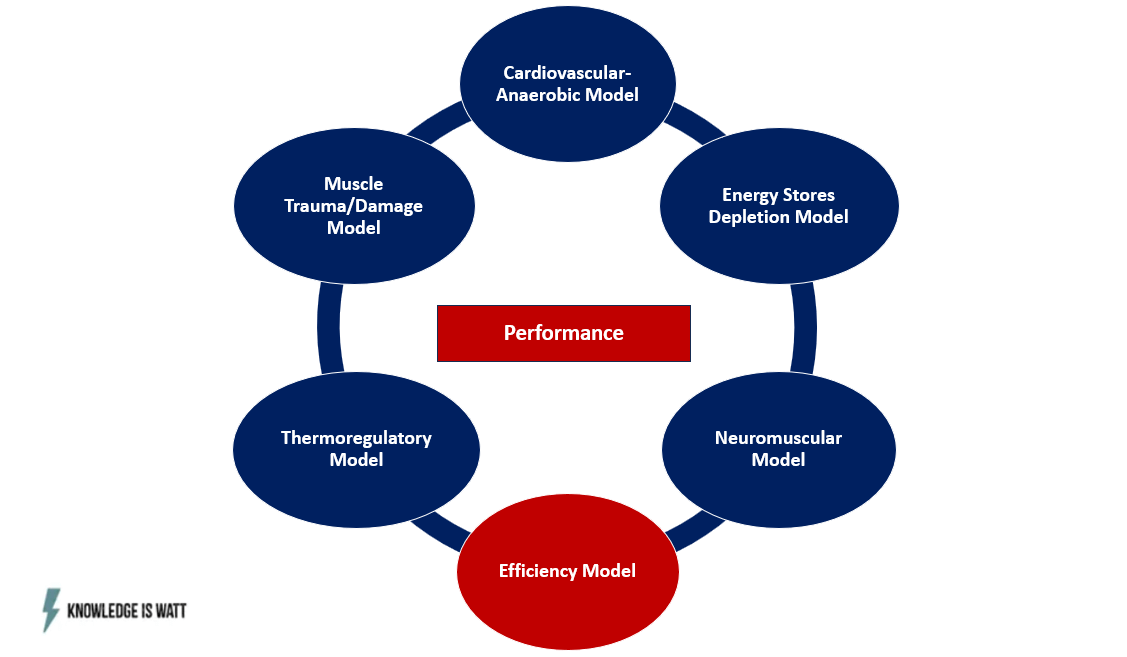
As with the other models, the goal is to better understand the physiological mechanisms underlying fatigue in order to optimize training and preparation strategies through the application of the Physiological Model of Endurance Performance (PMEP).
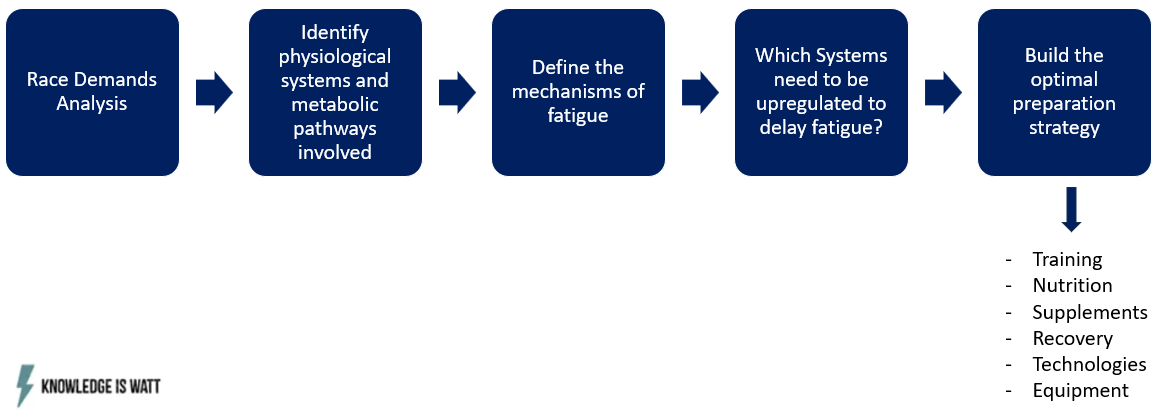
1. What Causes Fatigue in the Efficiency Model?
The efficiency model of endurance performance is grounded in a simple concept: if the physiological cost required to sustain a given speed is reduced, fatigue will be delayed. (1)
Efficiency = Speed / Physiological Cost
In this perspective, performance is not just about how powerful the engine is, or how much fuel is available, but about how effectively the engine uses that fuel to produce watts, and how effectively those watts are converted into speed. Improving efficiency has a positive, fatigue-delaying effect across the other physiological models. For example, greater efficiency can reduce:
the oxygen required to produce a given power output (Cardiovascular–Anaerobic Model)
the fuel needed to sustain a given speed (Energy Stores Depletion Model)
the perturbation of ions and neurotransmitters to transmit the signal from the brain to the muscle (Neuromuscular Model)
the rise in core body temperature (Thermoregulatory Model)
Therefore, it is more appropriate to think in terms of an integrated model of fatigue, where all the single models we are exploring are closely interdependent rather than independent.
So, efficiency = speed/physiological cost. But what is “physiological cost”?
It can be defined and improved from different ways depending on the perspective adopted. Let’s now examine these in more detail.
2. How Efficiency Can Be Improved
There are two possible definitions of physiological cost, and so two approaches about how efficiency can be improved.
aerodynamics/equipment
metabolic cost (gross efficiency)
